Network of research infrastructure
Research Infrastructure across Three Locations
POLiS benefits from a comprehensive network of state-of-the-art research infrastructures at Ulm University, Karlsruhe Institute of Technology (KIT) and Justus Liebig University Giessen (JLU). These facilities provide cutting-edge capabilities for battery materials synthesis, cell manufacturing, advanced characterization, electrochemical testing, and data-driven materials research. From pilot-scale production and large-format cell manufacturing to high-end microscopy, spectroscopy, and automated Materials Acceleration Platforms, the available infrastructure supports the entire battery research and development process – from fundamental materials discovery to prototype validation. Together, these facilities enable interdisciplinary collaboration and accelerate the development of next-generation electrochemical energy storage technologies beyond lithium.
Infrastructure at Ulm University
Shared Facility CELEST Green Energy Lab Ulm
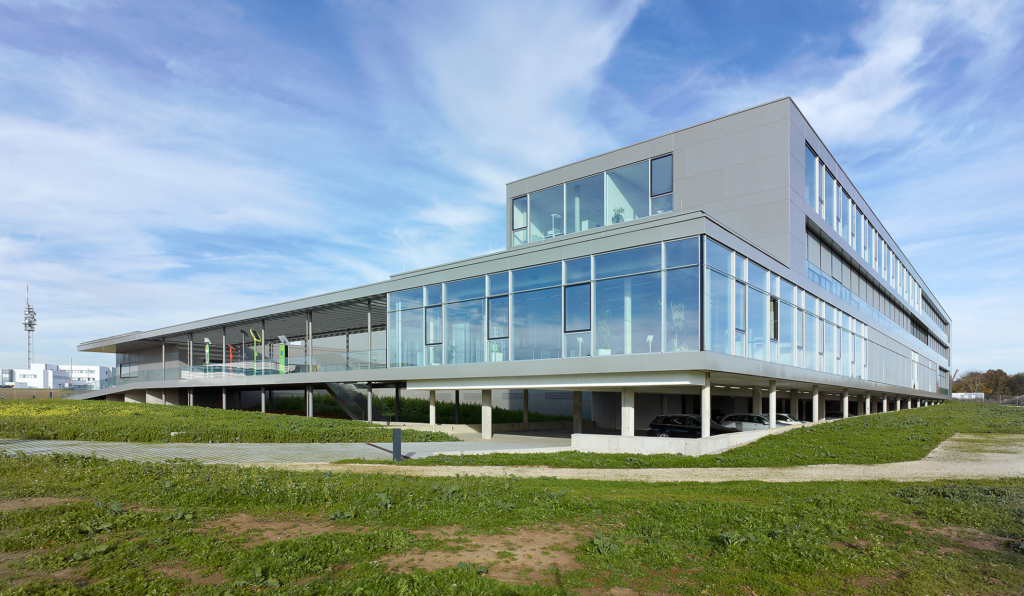
The CELEST Green Energy Lab Ulm as Shared Facility of Ulm University combines physics and chemistry laboratories specialized for research in the field of energy storage and battery research. Main users are researchers of POLiS and associated projects. The physics and chemistry laboratories offer a wide selection of high-end devices, including SEC(C)M-AFM, SEM with CleanMill cross section polisher, XPS, XRF, Spray Dryer, Sputter Coater and Scanning Droplet Cell, that allow research from materials synthesis to characterization and electrochemical processes. The instruments and various gloveboxes are supplemented by the POLiS Materials Acceleration Platform (POLiS MAP). With the Shared Facility, we are aiming at establishing a reference laboratory for electrochemical energy storage beyond Lithium.
POLiS MAP
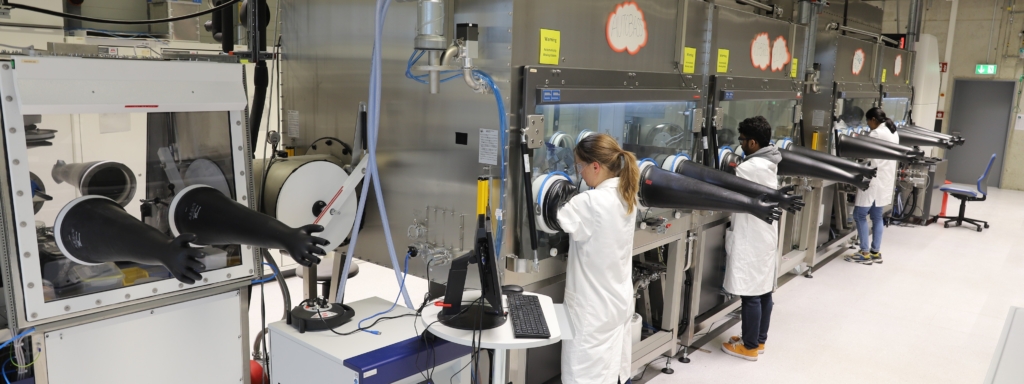
The POLiS MAP combines various experimental and analysis techniques integrating them in extensively automated and configurable workflows. This allows the platform to cover the tasks of a conventional laboratory for battery research, while providing a common interface for all its associated instruments and methods and enables for example machine learning algorithms to interact with the platform. While individual modules of the setup can be used independently and autonomously, their integration in Materials Acceleration Platforms, including institutions in different locations, has also been demonstrated. This fosters tighter collaborations among research institutes and enables researchers to use instruments and methods that might normally not be easily accessible to them.
Core Facility EMMA

The Core Facility EMMA is an established central instrumentation facility for Elemental, Molecular and Materials Analysis at Ulm University providing researchers from university and external institutions with a wide range of chemical characterization techniques. The instrumentations cover molecular structure analysis (e.g. NMR, MS, XRD and elemental analysis), materials analysis (XRD, TGA, DSC, GPC) and surface analysis (XPS, FIB-SEM) enabling detailed characterization of compounds from the molecular to the material level. The shared resources of the Core Facility thus help drive the development of novel materials for post-lithium systems.
Infrastructure at Karlsruhe Institute of Technology (KIT)
Battery Technology Center (BATEC)
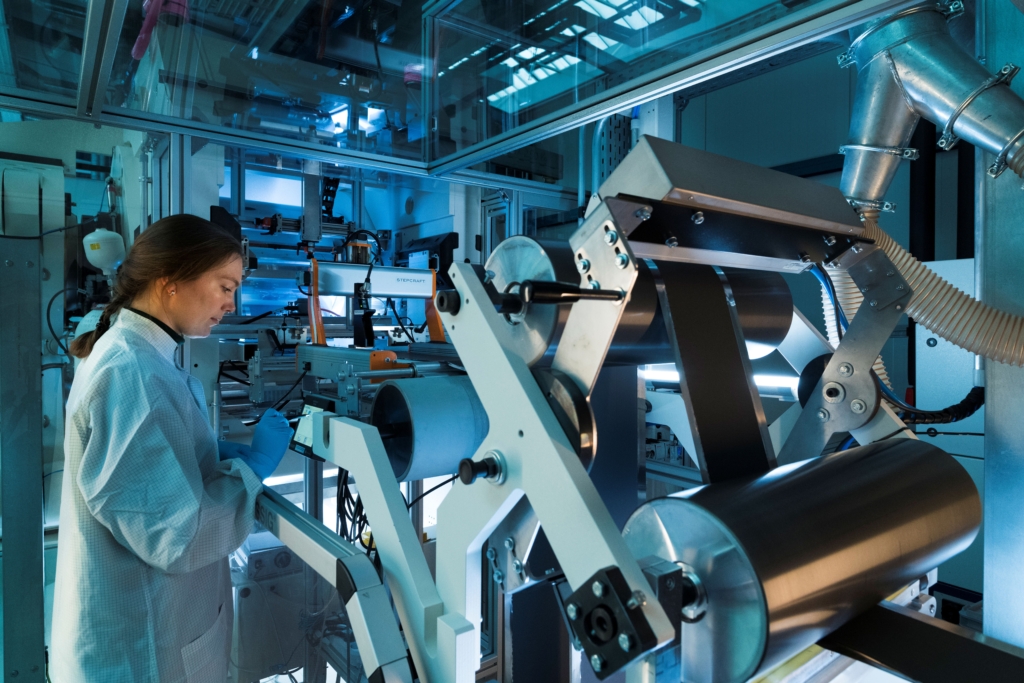
At Karlsruhe, the Battery Technology Centre (BATEC) pools KIT’s scale-up and engineering expertise with a focus on the industry-oriented development and production of new materials and cells and the integration of batteries in specific applications. A specific asset is the complete pilot line for flexible large-format cell manufacturing and testing and the Helmholtz Energy Materials Foundry (HEMF) for scale-up of electrode materials is able to provide batches up to 10 kg for the manufacturing of the POLiS reference and demonstrator cells. The BATEC also covers test facilities for high power tests (up to 500 A) and dedicated environments for safety tests, complemented by Europe’s largest battery calorimeter laboratory.
Karlsruhe Nano Micro Facility (KNMFi)

The Karlsruhe Nano Micro Facility (KNMFi) is a high-tech platform for information-driven structuring and characterization with an open user-oriented laboratory for microscopy and spectroscopy. This laboratory hosts the KIT infrastructures for XPS, ToF-SIMS and TEM for POLiS and under the leadership of POLiS PIs.
Infrastructure at Justus Liebig University Giessen (JLU)
Giessen Center for Electrochemical Materials Research (GC-ElMaR)
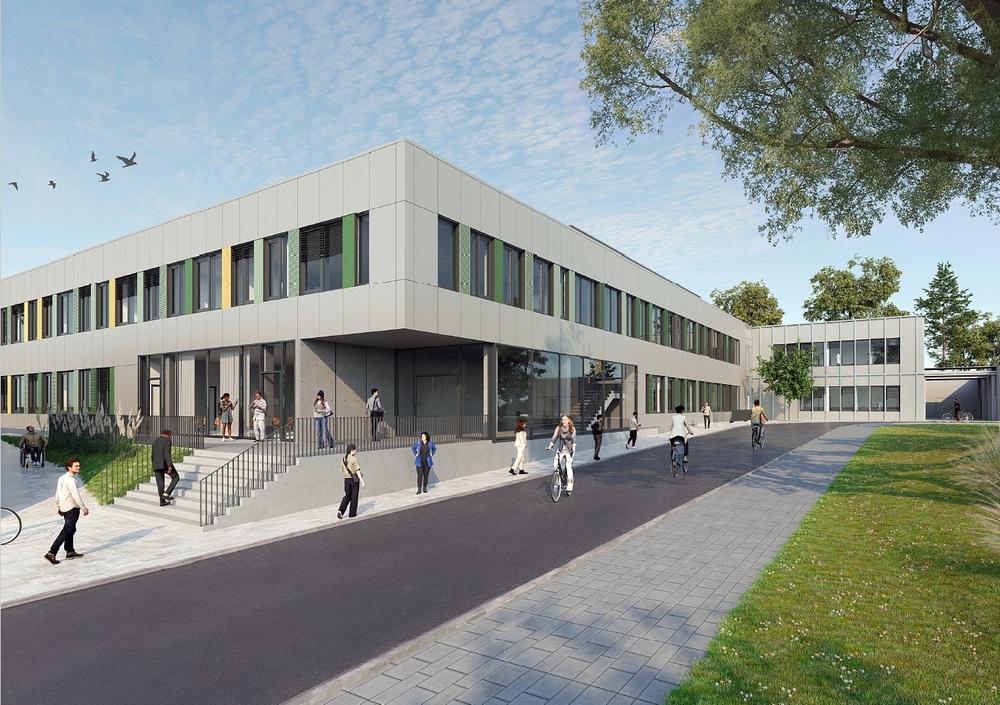
The GC-ElMaR at the University of Giessen is a research center dedicated to solid-state electrochemistry and materials science for energy storage and conversion technologies. With a strong focus on all-solid-state batteries and solid electrolytes, the facility brings together chemists and physicists to conduct interdisciplinary research on electrochemical materials, interface phenomena, and high-performance materials under extreme conditions. The center’s research program is organized into four interconnected areas: resource-optimized electrochemical energy storage, high-performance materials for extreme operating conditions, interface science and charge transfer, and high-resolution in situ and operando analytics. The GC-ElMaR is equipped with a comprehensive analytical platform featuring state-of-the-art instrumentation including high-resolution scanning electron microscopy, Auger electron microscopy, transmission electron microscopy, secondary ion mass spectrometry, and photoelectron spectroscopy. The facility integrates synthesis, characterization, and analytics under inert-atmosphere conditions with joint laboratory and project spaces designed to enable close interdisciplinary collaboration on air and moisture-sensitive materials and solid-state battery cells. GC-ElMaR is expected to come into operation around the end of 2027.